

Cedar fences
Cedar Fences in Rockwall, TX
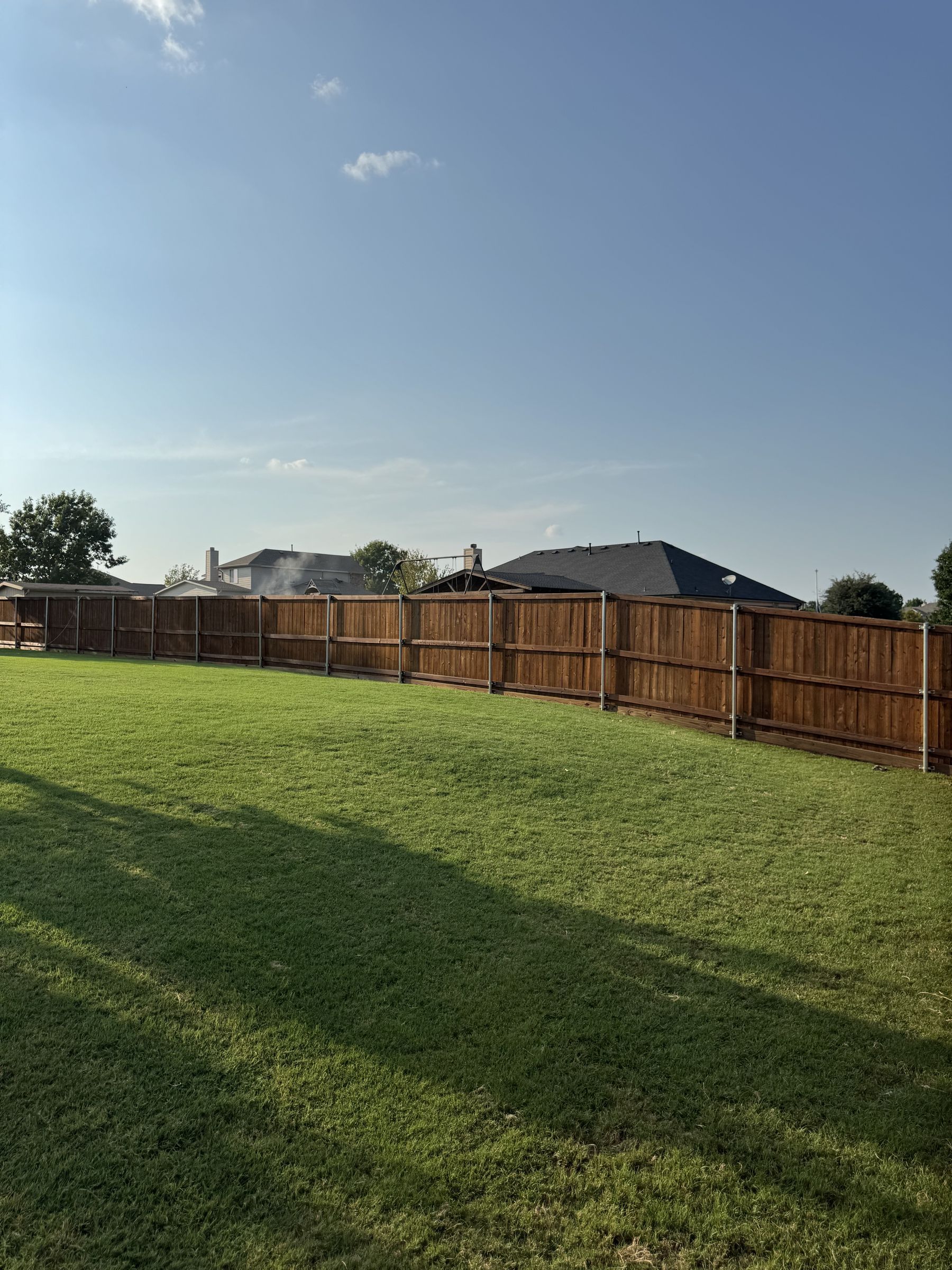
Japonica cedar fences on steel posts in Rockwall and nearby cities. Old fence removal included in a typical install.
Why homeowners choose Vorsaw
-
Local to Rockwall
We live and work in Rockwall County.
-
Licensed and insured
-
Written warranty
Clear written warranty that transfers with the property if you sell and move.
-
HOA approval help
We help with the drawings and paperwork your HOA asks for.
-
Free written quotes
We measure using satellite imagery for accuracy.
Cedar fences on steel posts
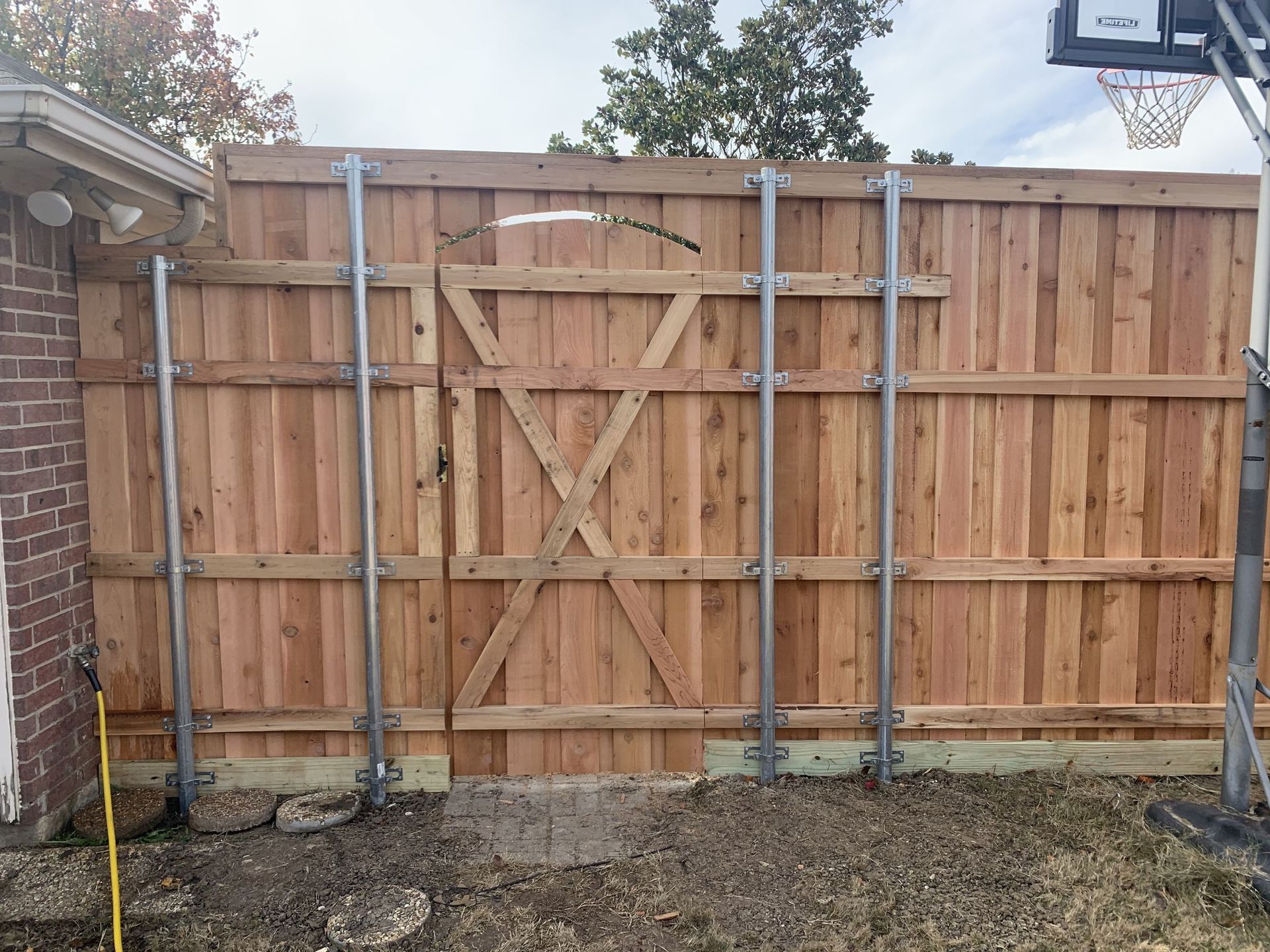
Cedar is the most common backyard fence in Rockwall County. It looks warm, holds stain well, and is the wood the City of Rockwall requires for solid fences in established neighborhoods. Vorsaw builds cedar fences on steel posts for homes in Rockwall and nearby cities.
The cedar we use: Japonica
Vorsaw builds with Japonica cedar, also called Japanese cedar or sugi (its botanical name is Cryptomeria japonica). For years, western red cedar from the Pacific Northwest was the standard fence wood. Japonica has become more and more common, and in our experience it has taken over as the cedar most fences are built with today.
Why the change happened
- Western red cedar got harder to get. Western red cedar comes from British Columbia and the Pacific Northwest. British Columbia's total timber harvest fell by more than 40% from 2016 to 2025, and suppliers point to the shrinking supply of western red cedar as the reason other woods stepped in.
- Japonica has a steady supply. Japonica is grown on managed plantations in Japan, where replanting is part of the system. Japan's own Forestry Agency has reported Japonica replacing western red cedar in American fences and decks. Much of it is milled in Japan or China for the US fence market.
How the two woods compare
- Same family. Both woods belong to the cypress family, and both have the soft texture and cedar scent people expect.
- Same weight and stiffness. The Wood Database lists both at about 23 pounds per cubic foot, with nearly the same stiffness.
- Rot resistance. Both resist rot in outdoor use. Western red cedar is rated durable to very durable, and Japonica moderately durable to durable.
- Takes stain well. Both stain and finish well.
- Grain and knots. Japonica has a straight, even grain, and its knots tend to be small and tight.
- Strength. Western red cedar is a bit stronger in bending and a bit harder. For pickets and rails on a backyard fence, that difference rarely matters.
Why we think Japonica is the better choice
Japonica is a light wood. Some people argue that makes it the lesser choice. We see it the other way. A lighter fence puts less load and less movement on the posts, so the posts have less work to do year after year. Paired with our steel posts, we believe Japonica is actually the better fence wood. Like any cedar, it lasts longest when it is stained and cared for.
Why steel posts under cedar?
Most fences fail at the posts, not the pickets. Wood posts can rot at the ground line, and our clay soil swells and shrinks with the weather. Steel posts do not rot. We use steel posts only.
The City of Rockwall code agrees. It calls for metal posts set in concrete, or masonry columns, on solid wood fences taller than 4 ft.
Cedar styles
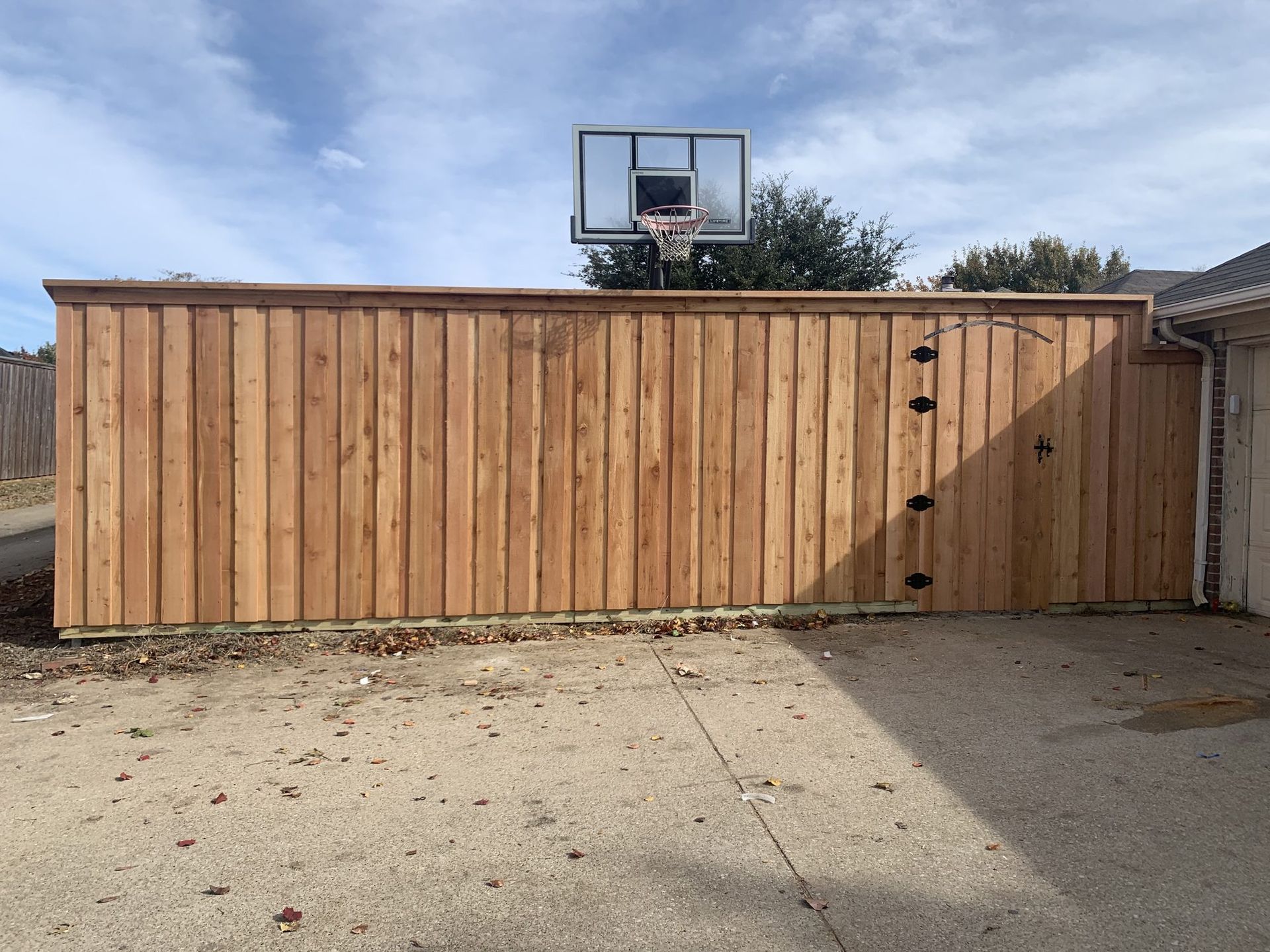
- Side by side privacy, 6 ft or 8 ft
- A ground contact 2x6 pine kickboard along the bottom, which we always recommend
Cedar and Rockwall code
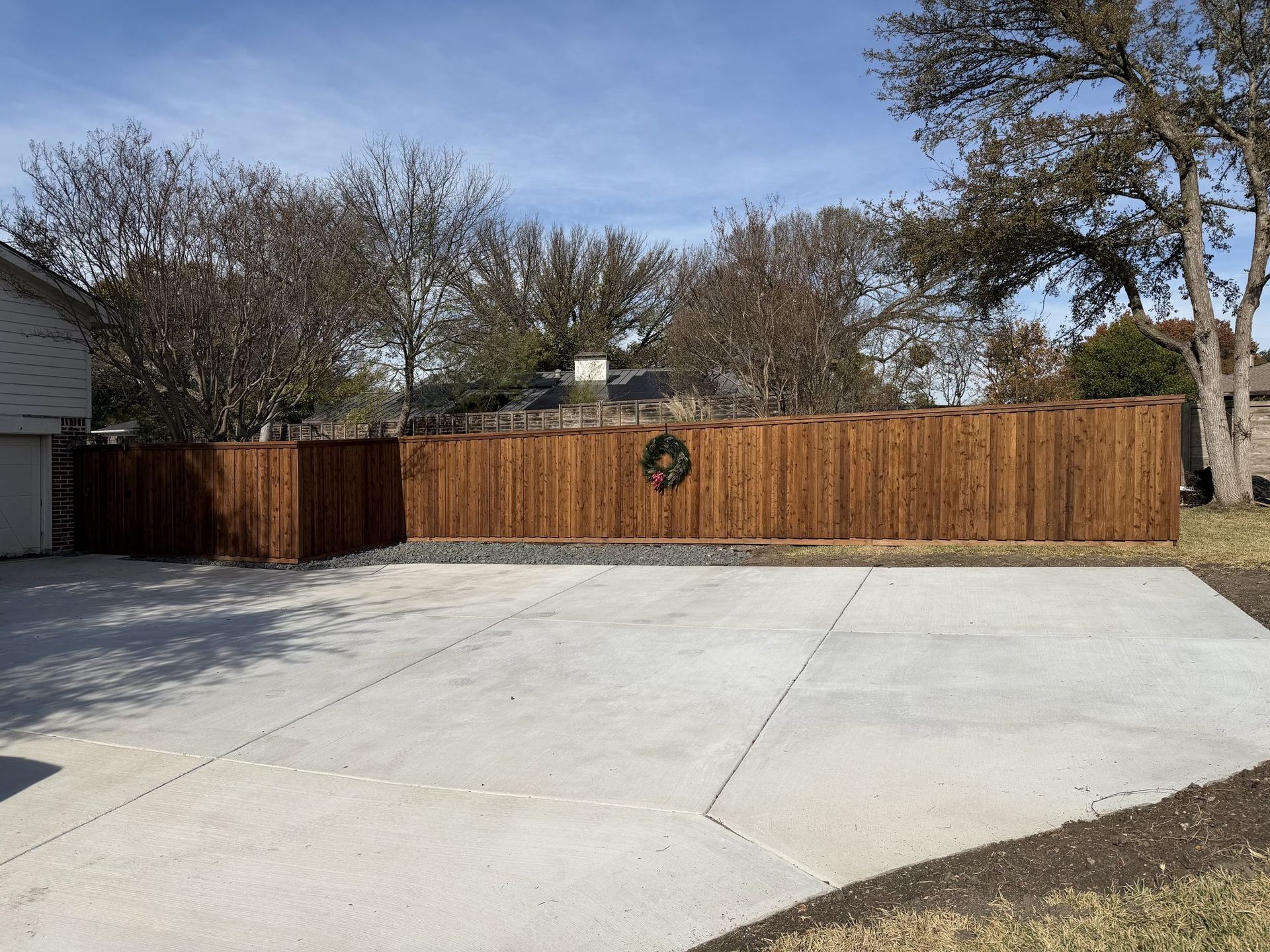
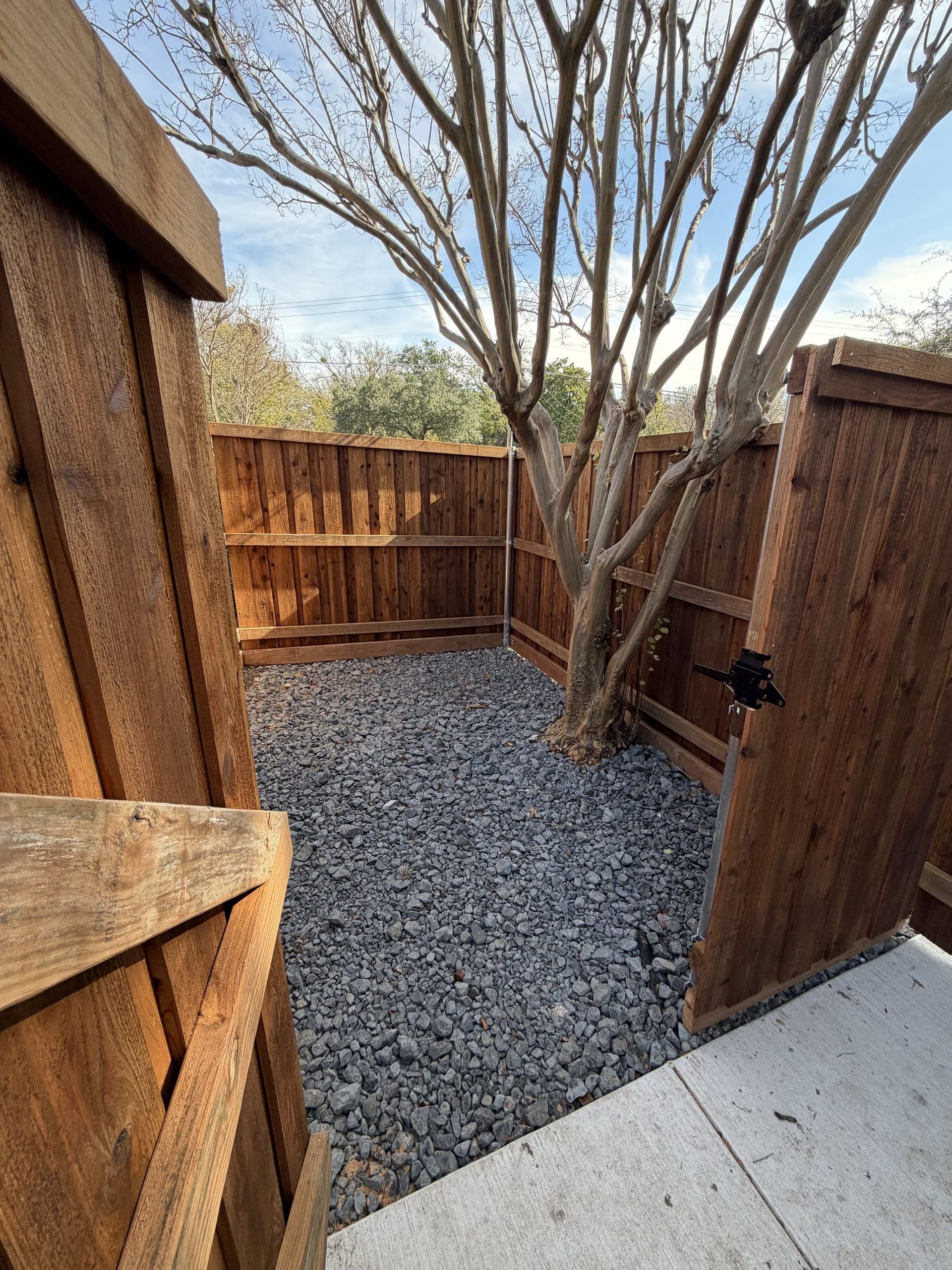
In established Rockwall neighborhoods, the city code requires solid fences to be cedar, with the pickets facing the street or neighbor side. It also does not allow oil or latex paint on those fences, which is why stain is the way to add color. We pull the permit and build to the code for you.
Cedar or pine?
We build mostly with cedar, and in most cases cedar is the better investment. We also offer pressure treated pine when you need a cost effective, short term fence and the city and your HOA allow it. Pressure treatment helps pine stand up to the weather, but a pine fence does not last as long as cedar. We stain pine 3 to 6 months after install, because stain put on too soon does not soak in and the fence can look splotchy. Cedar is ready much sooner, usually 24 to 48 hours after it is installed.
Replacing an old fence
Old fence removal is included in a typical install. We take out the old pickets, rails, and posts, then build the new fence on steel posts.
Google reviews
What our customers say
-
Rated 5 out of 5
The team cleaned and stained our 3 panel ranch fence covering 1.5 acres
Steven H. Google review -
Rated 5 out of 5
Vorsaw Fencing was a great experience, quick service and great communication. Would recommend.
Garnet B. Google review -
Rated 5 out of 5
We had Vorsaw Fencing rebuild our fence after a storm came thru, they did a fantastic job, very professional and completed the job in the time frame that had been discussed.
Pam P. Google review
Questions
Cedar fence questions
What kind of cedar do you use?
Japonica cedar, also called Japanese cedar or sugi. Western red cedar used to be the most common fence cedar, but Japonica has become more and more common, and in our experience it has taken over. Both are light, cedar scented woods from the cypress family that resist rot and take stain well.
Is Japonica cedar as good as western red cedar?
We believe it is better for fences. The two woods weigh about the same and are nearly as stiff, and both resist rot. Western red cedar is a bit stronger in bending, but Japonica is light, and a lighter fence puts less load and movement on the posts. That is why we choose it.
Why did fence companies switch to Japonica cedar?
Mostly supply. Western red cedar has become harder to get, while Japonica is grown on managed plantations in Japan and arrives in steady supply.
How long does a cedar fence last in Texas?
It depends on sun, water, soil, and care. Steel posts and regular stain help a cedar fence last longer than wood posts and bare wood.
Cedar or pressure treated pine?
Cedar, in most cases. It is the better investment and is the material the City of Rockwall requires for solid fences in established neighborhoods. We offer pressure treated pine when you need a cost effective, short term option and the code allows it.
Should I stain a new cedar fence?
Yes. Stain slows graying and protects against sun and water. See fence staining.
How soon can a new cedar fence be stained?
Usually 24 to 48 hours after all the lumber is installed. Cedar is not pressure treated. The boards carry a little moisture from the lumber yard and the pallet, and the sun dries it out once they are hung. Then the fence is ready for stain. Pressure treated pine is different: we wait 3 to 6 months.
Do you remove my old fence?
Yes. Old fence removal is included in a typical install.
Match the rest of the yard
Have a wood pergola near your new cedar fence? We can stain it to match. See pergola staining. Cedar gates are built to match too. See gate installation.
Free quote
Get a free written quote
Call or text (469) 338-7959 or send the form. Monday to Saturday, 8am to 6pm. We measure on satellite for accuracy.